
Electric Aircraft Propulsion Systems for eVTOL, eSTOL & Heavy Air Mobility
Architected for regional air mobility, uncrewed logistics, and tactical aviation. Turn-key 60kgf to 1000kgf ducted powertrains engineered with 550V–800V DC high-voltage bus integration, full blade containment, and 53 dB(A) vertiport-compliant acoustics.
Supply Scope Demarcation: Yuntu manufactures certified electric ducted fan propulsion units, integrated motor-inverter powertrains, and aerodynamic nacelle assemblies. We do NOT manufacture or sell complete passenger aircraft, certified airframes, or commercial flight services.
YTD-1000 (1000 kgf / 9.8 kN)
Engineered for regional commuter aircraft and multi-engine heavy eVTOL. Integrates 700V–1000V DC high-voltage architectures with ballistic composite shroud containment.
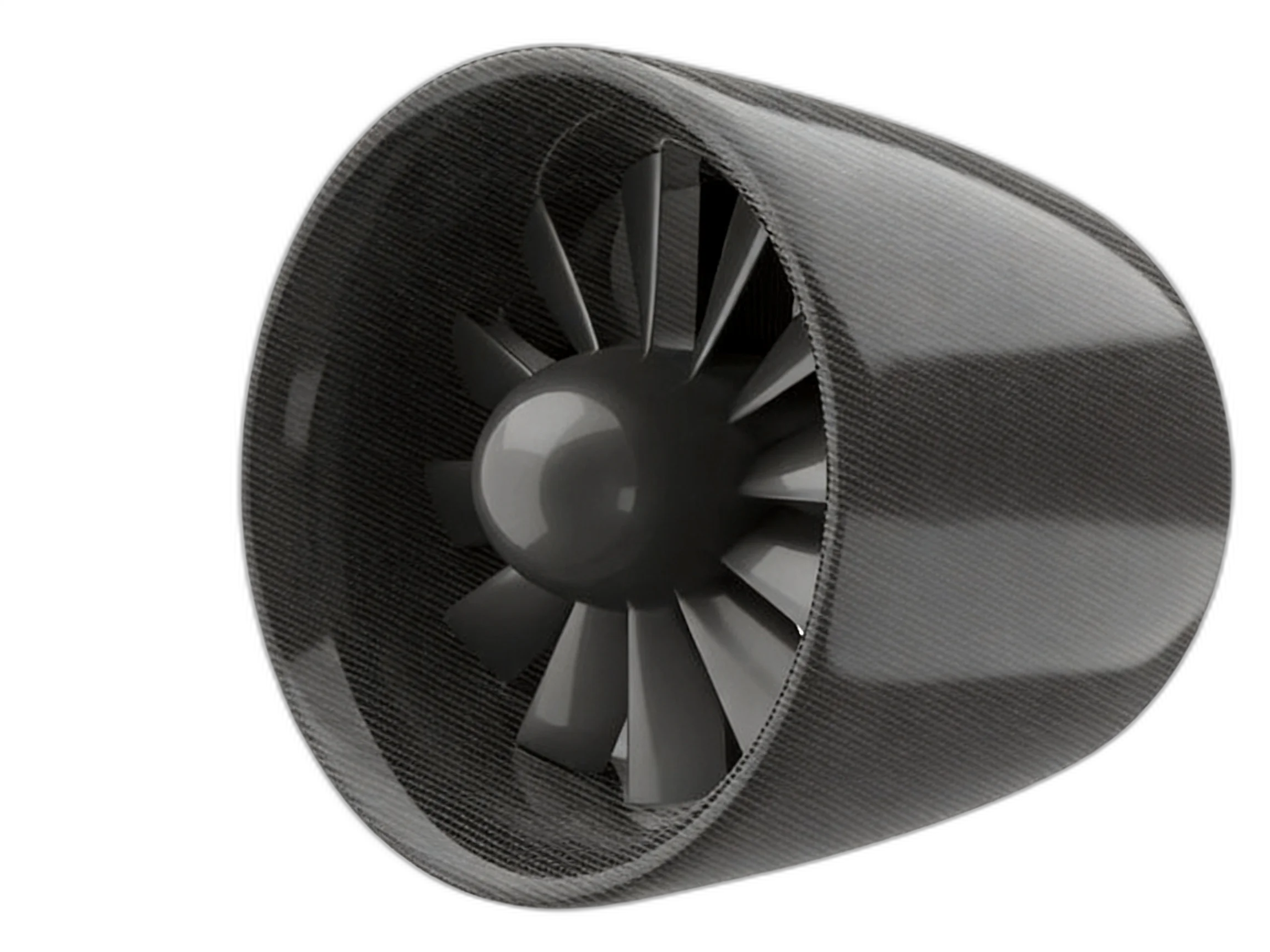
Electric aircraft propulsion encompasses airborne powertrains that convert stored electrochemical or hybrid electrical power into aerodynamic thrust via high-efficiency motor-inverter-propulsor assemblies. Compared with exposed open propellers that suffer from tip-vortex cavitation, blade-passing noise spikes, and uncontained throw risks, enclosed electric ducted fan (EDF) systems utilize aerodynamic lip suction to increase static thrust by 18–25%, lower community flyover acoustics to under 53 dB(A) at 100m, and guarantee structural rotor containment within an aerospace-grade carbon-composite nacelle. Yuntu designs and manufactures turn-key 60kgf to 1000kgf ducted electric propulsion systems for certified aircraft OEMs; Yuntu does NOT manufacture or sell complete passenger aircraft, airframes, or air-taxi flight operations.
High-Voltage Powertrain Architecture: From DC Power Distribution to Aerodynamic Thrust
A certified aerospace electric propulsion system requires seamless electrical, electromagnetic, thermal, and aerodynamic harmonization. Here is how Yuntu architectures the end-to-end propulsion energy train.
Direct Slot Liquid Cooling with Structural Composite Nacelle
The electric drive is seamlessly enclosed inside the aerodynamic center nacelle, leveraging high-speed inflow and internal micro-channels for thermal equilibrium.
High-Voltage DC Power Distribution Unit (PDU)
Operating at 550V–800V reduces conductive copper mass by over 60% compared to legacy 48V/100V systems, mitigating I²R thermal losses across long aircraft wing-spar cable runs while managing partial-discharge insulation thresholds up to 15,000 ft.
Dual galvanically-isolated high-voltage rails with real-time insulation resistance monitoring (>100 MΩ).
Silicon Carbide (SiC) Motor Controller / ESC
Silicon Carbide MOSFET switches minimize switching transients and dead-time distortions, enabling ripple-free field-oriented current injection into low-inductance aerospace PMSM stators under rapid throttle transitions.
Isolated gate driver channels with hardware-level overcurrent, desaturation, and thermal foldback protection.
High-Torque Density Brushless PMSM
Direct stator slot liquid cooling dissipates continuous heat loads during high-power vertical takeoff climb, maintaining winding temperatures below 125°C under 45°C ambient ground saturation conditions.
Dual-winding isolated 3-phase configuration preventing total thrust loss upon single inverter channel failure.
Composite Ducted Aerodynamic Assembly
The optimized elliptical inlet lip accelerates ambient inflow, generating forward suction pressure that delivers 18–25% extra static thrust per unit diameter compared to free rotors. Downstream stators recover rotational swirl energy into axial velocity.
120% overspeed containment tested to FAR Part 33.19 standards; zero external shrapnel penetration.
Integrated Avionics & FADEC Interface
Deterministic communication protocols interface directly with triple-redundant flight control computers (FCC), executing torque-vectoring maneuvers without mechanical control surfaces or swashplate complexities.
Cross-channel health monitoring with automatic limp-home mode during single-channel packet corruption.
Aero-Acoustic Evaluation: Open Propeller vs. Ducted Fan vs. DEP
Selecting the propulsive topology dictates cruise aerodynamic drag, vertiport acoustic clearance, and structural integration penalties. Below is a rigorous comparative analysis based on empirical wind-tunnel and test-cell data.
| Engineering Metric | Open Propeller | Enclosed Electric Ducted Fan (EDF) | Distributed Electric (DEP) |
|---|---|---|---|
Static Thrust per Unit Diameter Enclosed ducts allow 40–50% smaller rotor diameters for identical takeoff thrust, drastically reducing landing gear height and vertiport parking footprints. | Baseline (Limited by disc diameter & tip vortices) | +18% to +25% Augmentation (Inlet lip suction pressure recovery) | High (Synergistic wing blowing & spanwise distribution) |
Acoustic Footprint @ 100m Flyover Electric ducted fans meet strict FAA/EASA urban noise requirements without requiring nighttime or low-altitude flight restrictions. | 78 – 88 dB(A) (Pronounced blade-vortex interaction noise) | 53 – 58 dB(A) (Acoustic liner dampens blade-passing frequency) | 60 – 66 dB(A) (Distributed phase acoustic cancellation) |
High-Speed Cruise Aerodynamic Drag For cruise speeds between 180 km/h and 350 km/h, ducted fan internal diffusion efficiency compensates for wetted area drag, especially when nacelles are blended into airframes. | Low parasite drag; high efficiency at Mach <0.35 | Nacelle wetted area drag; mitigated by internal diffusion & BLI | Low net drag when integrated into wing boundary layer ingestion |
Mechanical Containment Safety Open blades require heavy structural airframe armor around passenger cabins. Ducted fans contain all blade shrapnel within the nacelle ring, saving fuselage weight. | Zero physical containment (Catastrophic blade throw hazard) | Full 360° Ballistic Containment (Aramid / Carbon Kevlar band) | Partial to full depending on individual motor shroud structure |
Tip Speed Mach Number Limit Lower tip Mach numbers prevent transonic shock wave generation, eliminating blade erosion and broadband shock noise entirely. | Mach 0.70 – 0.85 (High transonic shock losses and acoustic boom) | Mach 0.55 – 0.65 (Subsonic controlled flow via intake diffusion) | Mach 0.50 – 0.62 (Low tip speeds across multiple small rotors) |
Hover & Low-Speed Regime
Ducted fan lip suction delivers superior static thrust density, enabling compact airframe footprints essential for vertiport operations and confined urban takeoff zones.
Acoustic Certification
The acoustic liner embedded inside the carbon shroud dissipates tonal blade-pass frequencies by up to 18 dB, achieving the sub-55 dB(A) threshold required for urban air mobility.
Crashworthiness & Ground Safety
Enclosed rotors eliminate the risk of blade strikes to ground ground-handling crews, first responders, and passengers during embarkation while rotors are spinning.
Certification Framework: Compliance Pathways & Standards
Yuntu propulsion powertrains are developed aligned with international civil aviation certification frameworks, facilitating downstream type certification for aircraft manufacturers.
Normal, utility, and commuter category electric airplanes; powerplant installation and fuel-equivalent electrical safety margins.
Empirical Proof: System safety assessment (FHA/PSSA/SSA) demonstrating catastrophic failure probability <10⁻⁷ to <10⁻⁹ per flight hour.
Category Enhanced passenger transport requirements; One-Engine-Inoperative (OEI) emergency climb capability.
Empirical Proof: Continuous maximum emergency thrust ratings (2-minute OEI rating) without thermal demagnetization or insulation breakdown.
Section 4 (Temp/Altitude), Section 8 (Vibration), Section 16 (Power Input), Section 21 (RF Emissions/EMI), Section 24 (Icing).
Empirical Proof: Full qualification testing on calibrated shaker tables and climatic chambers from -40°C to +65°C up to 25,000 ft equivalent altitude.
Motor control firmware, CANaerospace bus communications, and internal fault diagnostics (DAL B / DAL C level).
Empirical Proof: Traceable requirements architecture, structural coverage analysis, and hardware-in-the-loop (HIL) automated fault injection testing.
Full containment of the most energetic single blade or rotor fragment following structural failure at 120% max RPM.
Empirical Proof: Physical spin-pit burst containment firing test using high-speed ballistic cameras and strain gauge arrays.
Power & Thrust Sizing Models across Aircraft Categories
A reference sizing guideline mapping takeoff weight (MTOW), hover power, cruise energy draw, and propulsion configuration for clean-sheet aircraft programs.
Light 1–2 Seater Personal eVTOL / eSTOL
4–6 Passenger Commercial UAM Air Taxi
Heavy Uncrewed Logistics & Cargo Transport
Regional Commuter Hybrid/Electric Aircraft
Propulsion Tailored to Aircraft Configurations
Explore how Yuntu 60kgf–1000kgf ducted propulsion units map directly into primary electric aircraft architectures.
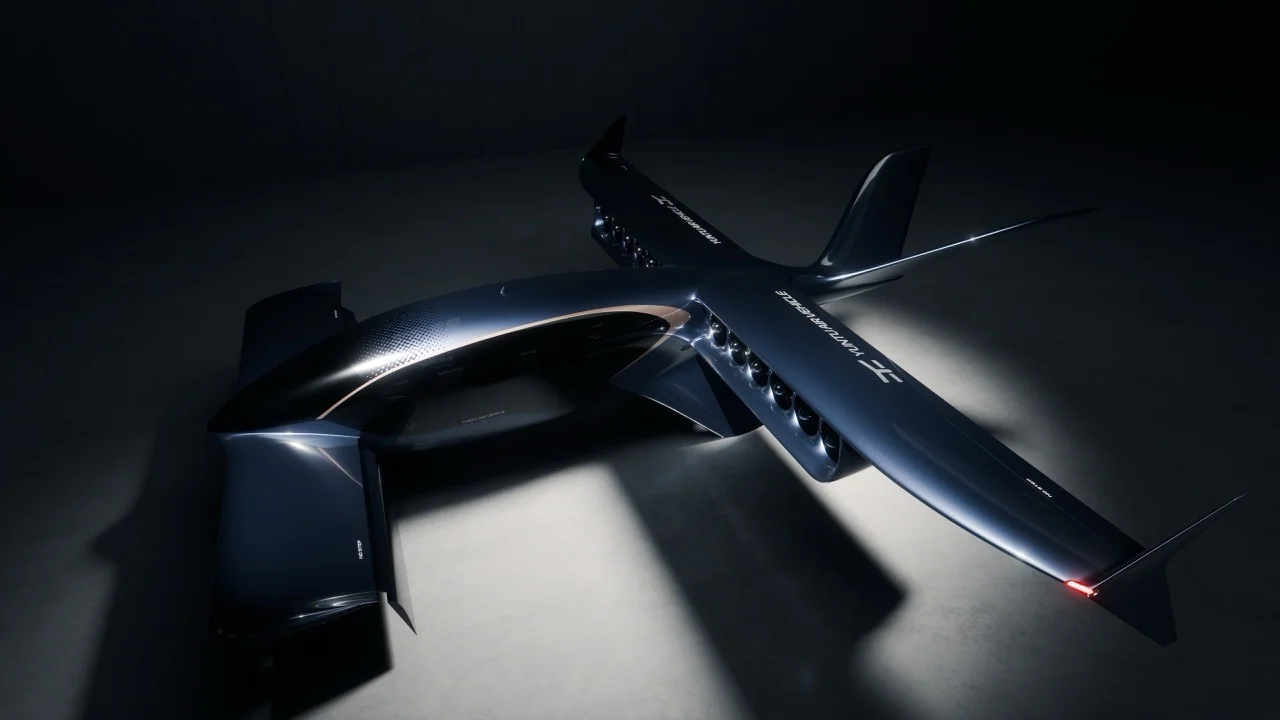
Passenger & UAM eVTOL
Acoustically certified propulsion arrays engineered to meet stringent FAA/EASA urban noise footprints while guaranteeing One-Engine-Inoperative (OEI) hover climb margins.
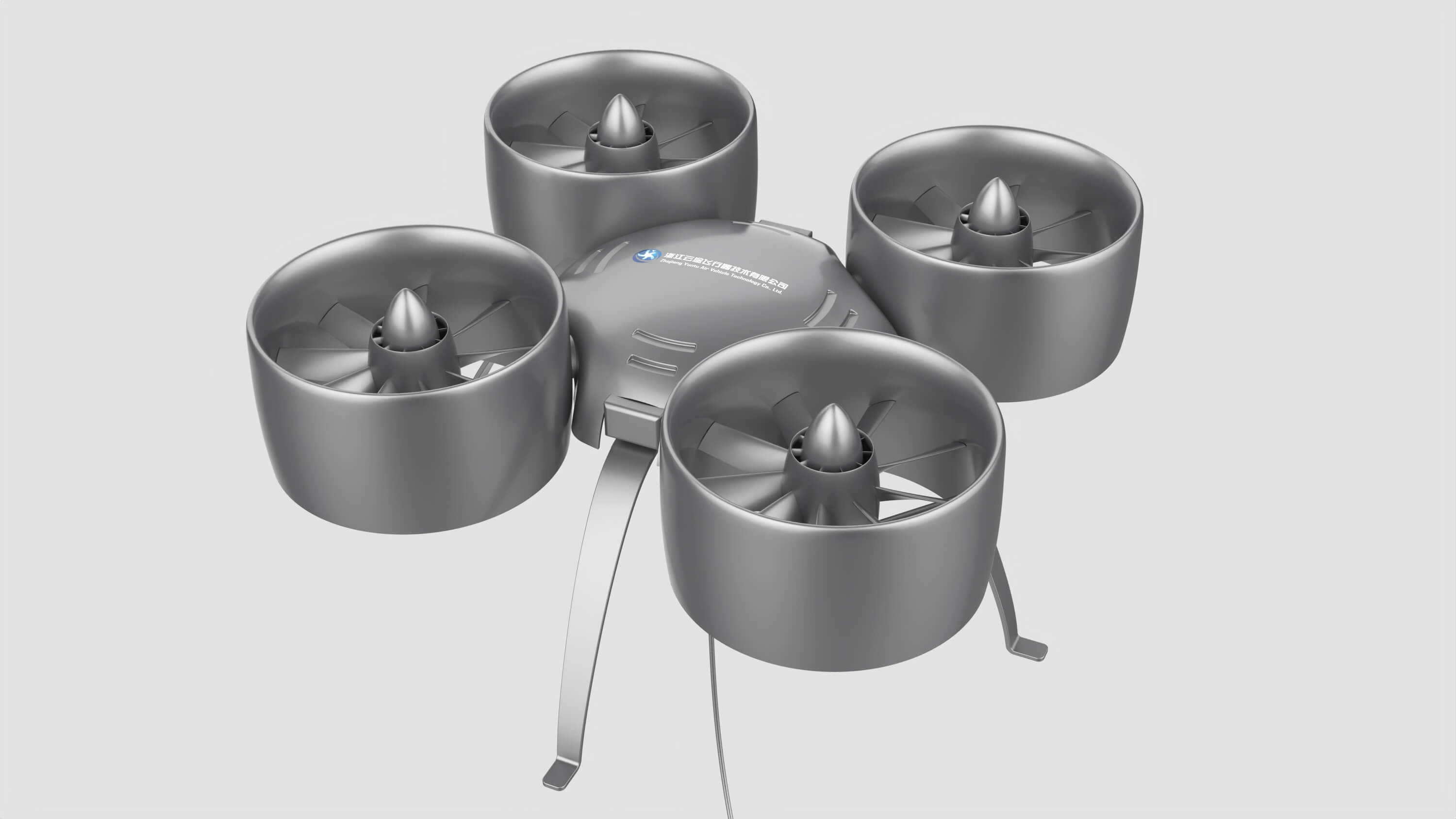
Heavy Cargo & Logistics Drones
Continuous-duty brushless powertrains designed for 100kg to 1200kg MTOW cargo UAVs operating in harsh industrial, maritime, and desert delivery environments.
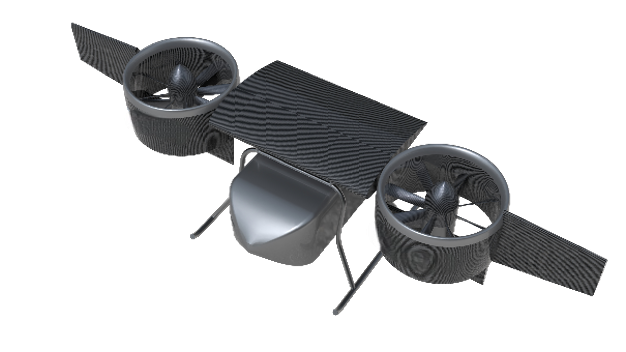
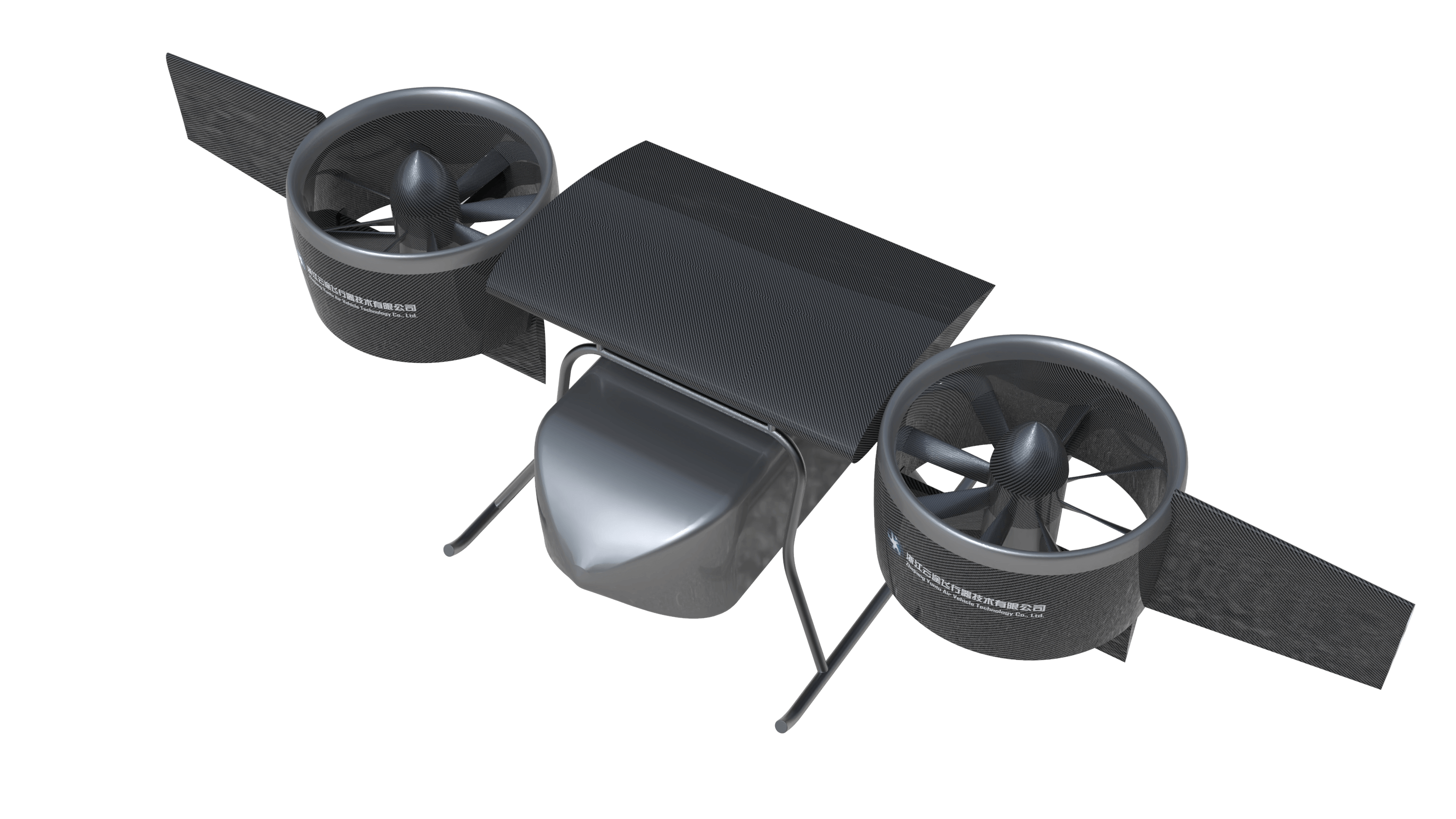
VTOL & Compound Fixed-Wing
Eliminates parasitic drag from stopped windmilling rotors during wing-borne 180–250 km/h cruise flight, expanding mission radius and transition stall margins.
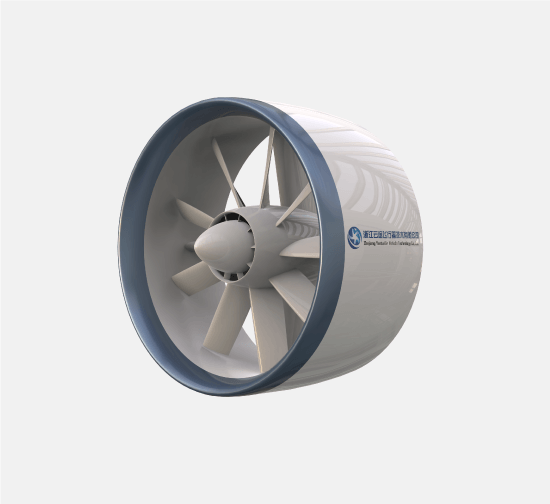
Commercial & Industrial UAVs
Shrouded blade protection prevents line entanglement during powerline and infrastructure inspection, while IP55+ sealed enclosures resist extreme dust and moisture.
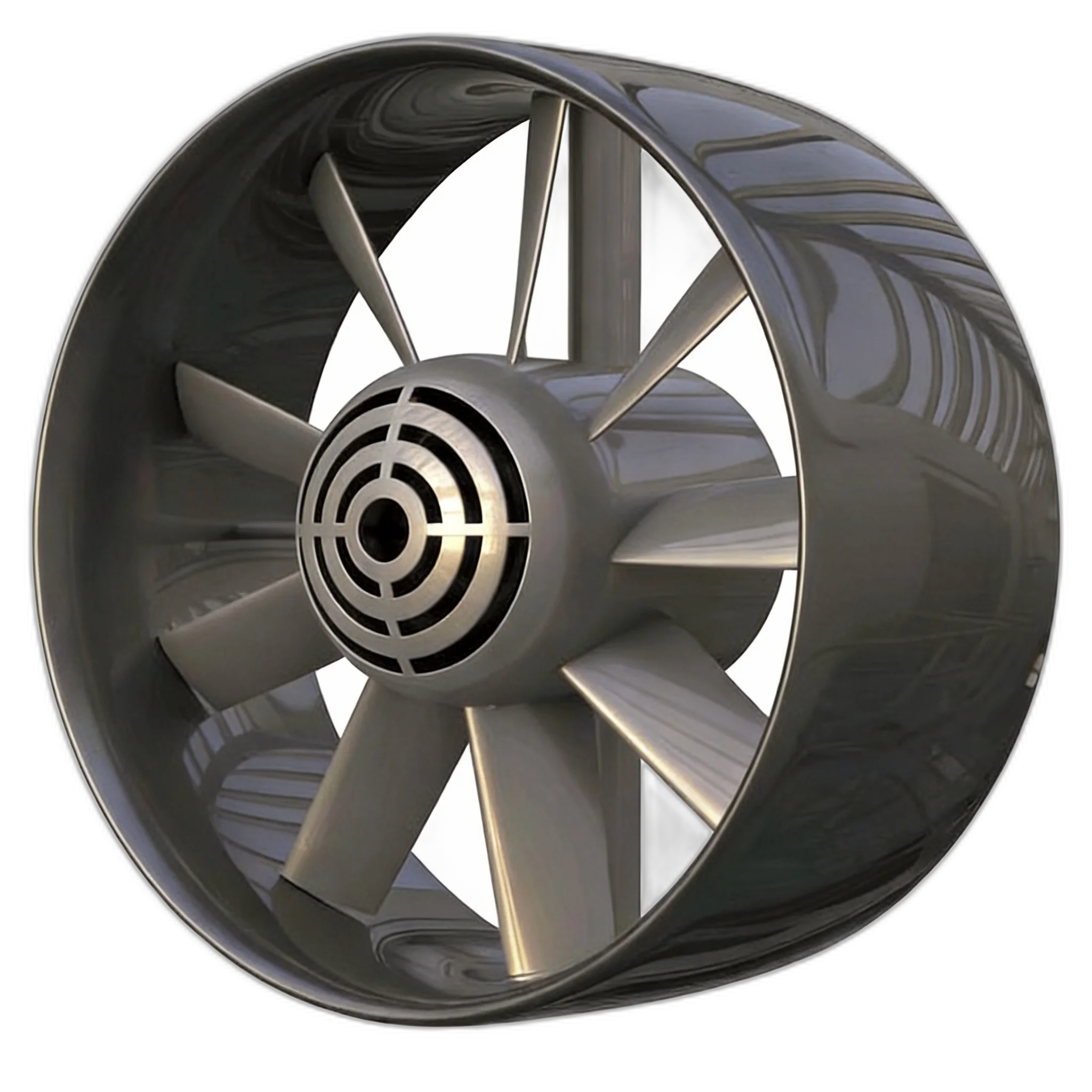
Bespoke Powertrain Engineering
Co-development program for airframe OEMs requiring specific voltage buses (400V–1000V), proprietary communication telemetry (CAN/Ethernet), and structural nacelle integration.
Certified Electric Ducted Fan Lineup (60–1000 kgf)
Standardized aerospace powertrains optimized for structural compactness, thermal endurance, and rapid integration into experimental and production aircraft.
| Model | Static Thrust | Duct Diameter | Optimal MTOW | Bus Voltage | Primary Application | Spec |
|---|---|---|---|---|---|---|
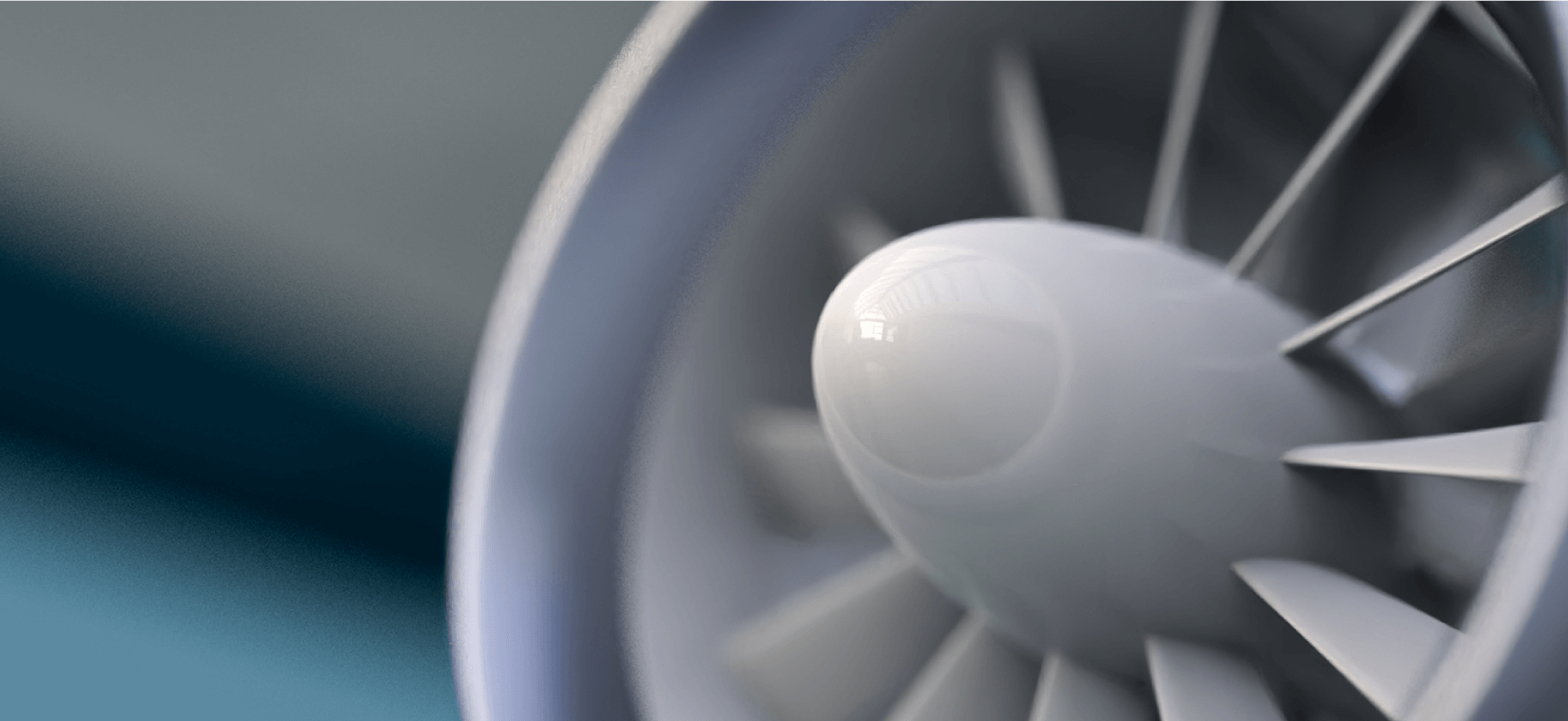 YTD-60 YTD-60 | 60 kgf (588 N) | 420 mm | 120 – 250 kg | 100V – 400V DC | Tactical UAVs, target drones, auxiliary eSTOL thrust boosters | View Spec → |
| YTD-200 | 200 kgf (1,960 N) | 680 mm | 400 – 900 kg | 400V – 600V DC | Light personal eVTOL, cargo drones, boundary-layer cruise pushers | View Spec → |
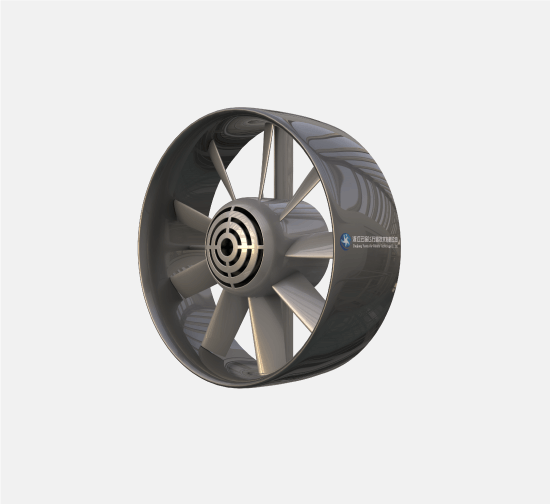 YTD-500 YTD-500 | 500 kgf (4,900 N) | 1,050 mm | 1,000 – 2,500 kg | 550V – 800V DC | Regional UAM air taxis, multi-engine heavy lift freighters | View Spec → |
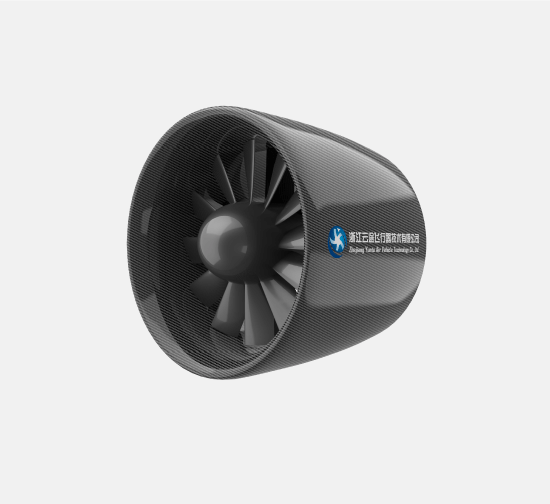 YTD-1000 YTD-1000 | 1000 kgf (9,800 N) | 1,420 mm | 2,500 – 6,000 kg | 700V – 1000V DC | Commuter regional aircraft, tactical heavy transport, high-speed eVTOL | View Spec → |
Frequently Asked Questions: Electric Aircraft Propulsion
Explore Related Aircraft & UAV Propulsion Solutions
Commercial & Industrial Drone Propulsion
Deterministic thrust calculations, anti-snag ducted protection, and IP67 ratings for grid inspection and heavy logistics.
eVTOL Ducted Propulsion Blueprint
Certified architectures for 2–6 seat passenger eVTOLs, meeting 53 dB(A) vertiport noise limits and 800V DC bus redundancy.
Electric Ducted Fan (EDF) Whitepaper
In-depth momentum theory, acoustic micro-perforated attenuation liners, and 60–1000kgf dynamometer test logs.
Architect Your Next-Gen Electric Aircraft Propulsion System
Engage directly with our aerospace propulsion engineering team to evaluate thrust sizing, acoustic simulations, and high-voltage electrical integration for your airframe program.