
High-Thrust Ducted Powertrains for Heavy-Lift & Logistics Drones
In-house OEM R&D and manufacturing for 100kg to 1200kg+ MTOW industrial flight platforms. Full 60kgf–1000kgf test-bench validated telemetry available. Endplate vortex confinement, 400V–800V DC bus topology, sub-300ms attitude response, and zero exposed blade entanglement hazard during heavy sling-load operations.
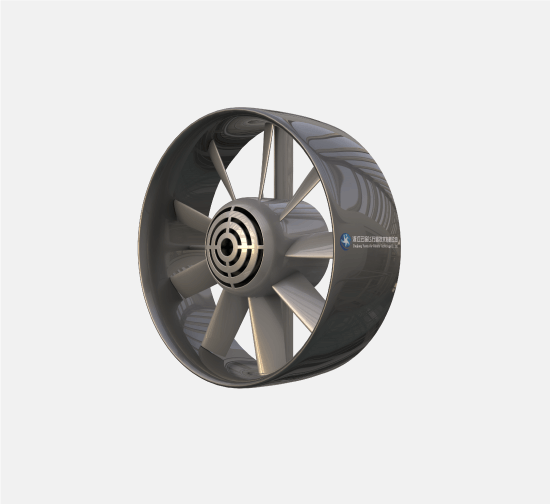
For 100kg to 1200kg+ MTOW industrial heavy-lift drones, high-power ducted fans break the scaling limits of open propellers. While open rotors exceeding 2 meters suffer severe aeroelastic blade flutter, wind-gust attitude latency, and catastrophic cable strike risks during sling operations, compact ducted fan arrays utilize aerodynamic endplate effects and tight tip clearance ratios (δ/R < 0.25%) to suppress tip leakage vortices (TLV). Combined with convergent intake lip suction that contributes 20% to 35% of total static thrust, ducted systems cut airframe footprint by 45%, ensure IP56 sand/rain ingress protection, and support safe personnel hot-turnaround cargo loading without thruster shutdown.
Overcoming the Open Propeller Scaling Trap in High-Disk-Loading Hover
Hovering a multi-hundred kilogram airframe with open rotors forces an untenable engineering compromise: expand blade diameter past 2 meters (triggering structural flutter and ground transport penalties) or spin smaller rotors at prohibitive tip Mach numbers. Ducted propulsors solve this scaling barrier through closed boundary aerodynamics.
Convergent Lip Suction Augmentation
The aerodynamically profiled convergent intake shroud establishes an intense negative gauge pressure field across the curved cowl lips. Under static hover conditions, this cowl suction contributes 20% to 35% of total gross thrust, achieving equivalent hover lift with significantly reduced rotor diameter.
Endplate Effect & Tip Leakage Vortex (TLV) Control
Open rotor tip vortices bleed up to 18% of shaft power into turbulent ambient wash. The rigid carbon fiber duct casing acts as an aerodynamic endplate, physically blocking 3D blade-tip vortex shed. Ultra-tight radial tip clearance (0.8mm to 1.2mm) drastically suppresses inner tip leakage vortices (TLV), boosting Figure of Merit (FM) to 0.74–0.78.
Low Inertia Dynamic Attitude Response
Compact multi-blade ducted rotors exhibit 72% lower rotational inertia (J) than 2-meter carbon propellers. This allows the flight controller to command sub-300ms 10%-to-90% thrust slew rates, eliminating high-mass attitude latency and providing rock-solid station-keeping in 15 m/s turbulent crosswinds.
Quantitative Evaluation: Ducted Array vs. 2.2m Open Multirotor vs. Crewed Light Helicopter
A comprehensive engineering and economic audit across logistics throughput, ground safety envelopes, and direct operating costs (DOC).
| Evaluation Parameter | Yuntu Ducted Heavy Array | 2.2m Open Propeller UAV | Crewed Light Utility Helicopter (e.g. H125) | Industrial Impact |
|---|---|---|---|---|
| Airframe Transport & Launch Footprint | Compact (2.4m x 2.4m for 500kg MTOW) | Massive (4.6m x 4.6m extended arms) | Extreme (13m rotor diameter) | Enables launch from standard flatbed trucks and unimproved forest clearings. |
| Ground Crew Safety & Hot Turnaround | Safe (Fully shrouded blades, 0.5m standoff) | Hazardous (Exposed 2.2m blades, 6m standoff) | Restricted (Rotor wash hazard, 15m standoff) | Enables continuous pallet loading and sling hooking while thrusters idle. |
| Sling Load Cable Entanglement Risk | Zero (Rigid duct prevents physical cable contact) | Catastrophic (High risk of cable-blade strike) | Low (Trained crew, but severe wash turbulence) | Eliminates vehicle loss risk in dynamic mountain and offshore crane missions. |
| Level 7 Gust Station-Keeping Drift | < 0.25m horizontal deviation | 0.8m – 1.4m oscillation | Pilot skill dependent (0.5m – 1.2m) | Guarantees sub-meter container placement on offshore oil rigs and wind turbine towers. |
| Direct Operating Cost (DOC / flight hour) | $45 – $75 / hr (Electric battery/hybrid) | $90 – $140 / hr (Frequent blade wear) | $1,200 – $2,200 / hr (Turbine fuel, flight crew, maintenance) | Achieves a 95% cost reduction compared to manned aerial cranes for medium logistics. |
| Ingress Protection (Sand, Rain, Salt) | IP56 certified labyrinth stator housing | IP43 typical (exposed motor coils) | Turbine sand erosion filters required | Survives abrasive quartz sandstorms in Gulf desert regions and maritime monsoon storms. |
Download Heavy-Lift UAV Ducted Propulsion Sizing Whitepaper (PDF)
Includes multi-rotor aerodynamic interference factors, sling-load clearance envelopes, and 200-1000kgf test-bench data.
Integrated 400V–800V DC Architecture & Ram-Air Convective Cooling
Continuous high-power delivery for multi-hundred kilogram payloads requires aerospace-grade electrical distribution and dual-circuit thermal dissipation.
800V SiC High-Voltage DC Bus
Stepping up from traditional 48V/100V systems to 400V–800V DC cuts electrical current by 80%, reducing cable I²R copper losses by 64% and shedding over 18kg of wiring mass in a 4-thruster heavy cargo airframe.
Self-Aspirated Ram-Air Ducted Cooling
Aero-profiled structural stator vanes double as internal heat dissipation conduits. High-velocity core exhaust wash actively aspirates ambient air across inverter heat sinks, eliminating auxiliary liquid cooling pumps and parasite power draw.
OEI (One Engine Inoperative) Power Balancing
If a single thruster suffers thermal derating or electrical isolation, the remaining ducted units instantaneously surge to 125% contingency rating, re-centering the thrust vector to prevent uncontrolled roll divergence.
Dual-Pendulum Oscillation Damping & 4-Phase Logistics Workflow
Mitigating cable sway dynamics during external sling-load transit in demanding terrain, validated through industrial field standards.
Review cargo drone payload, range and thrust margin for mission-level propulsion planning.
Safe Hooking in Low-Velocity Downwash
Ground crew attaches cargo straps directly beneath the fuselage with zero decapitation hazard. Shrouded cowls prevent cable whip fouling.
Anti-Vortex Hover Lift Off
Concentrated ducted jet prevents gravel recirculation (FOD mitigation), lifting containers cleanly without pendulum kickoff.
Active Cable Sway Damping
Sub-300ms thrust vector correction counteracts external cable swing moments, preventing airframe-payload divergent resonance.
Sub-Meter Spot Placement
Automatic hook release with instant vertical thrust arrest; allows immediate uncoupling and return-to-base without motor shutdown.
Airframe MTOW to Yuntu Ducted Powertrain Sizing Guide
Standardized aerospace configurations matched to targeted commercial payloads and mission duty cycles.
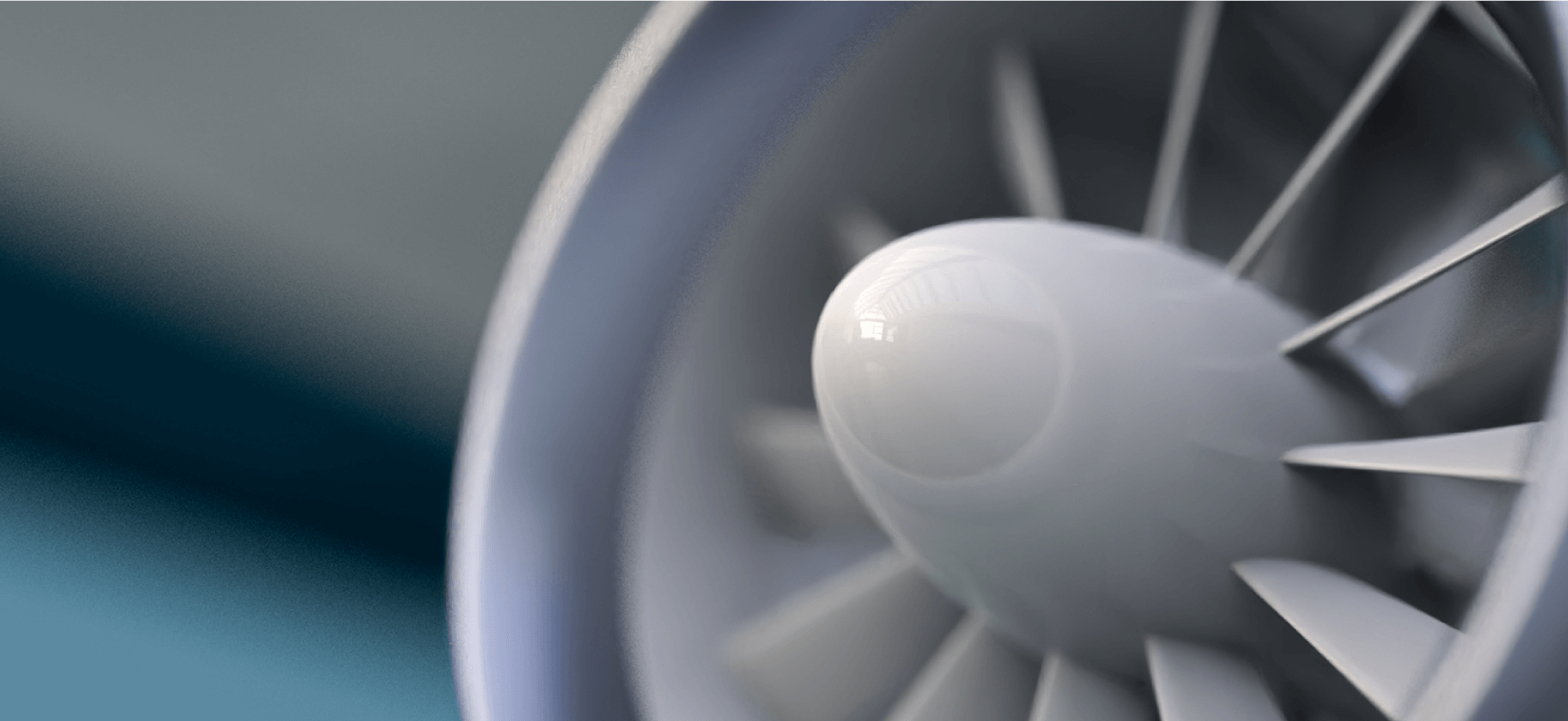
Yuntu 60kgf High-Efficiency Ducted Fan
Medical courier, mountain power-line stringing, offshore wind component delivery
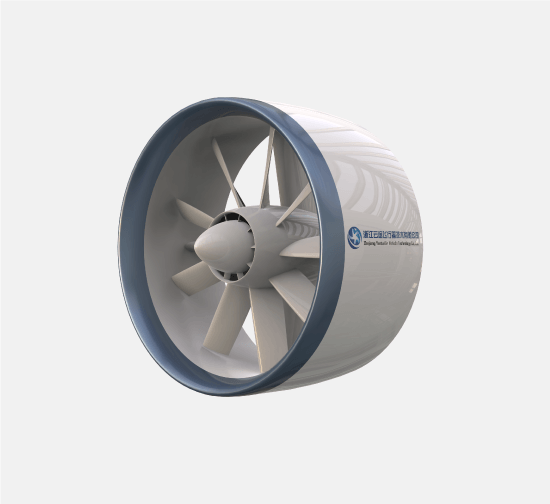
Yuntu 200kgf Heavy Industrial Powertrain
Mining equipment resupply, island cargo pallets, emergency logistics
Yuntu 500kgf Megawatt Heavy Lift Unit
Emergency disaster humanitarian relief, heavy aerial crane, timber extraction
Aerospace Ducted Propulsion by Mission Profile
Frequently Asked Questions: Heavy-Lift Ducted Propulsion
01How do I select ducted fan motors for a 100kg payload heavy-lift drone?+
02Why do ducted fans outperform 2-meter open propellers on 500kg+ cargo drones?+
03What is the physical reality of tip vortex suppression in ducted fans?+
04How does high-voltage 800V DC integration improve heavy cargo flight endurance?+
05Can ducted fans tolerate gravel and foreign object debris (FOD) on unimproved sites?+
06Does Yuntu support custom ducted fan airframe integration and non-standard thrust sizing?+
Ready to Size Your Industrial Heavy-Lift Drone Powertrain?
Submit your MTOW, target payload, hover duration, and bus voltage specifications. Our aerospace propulsion team will provide a 1D momentum sizing report and 3D CAD integration envelope within 48 hours.