
Yuntu UAE: Electric Ducted Fan Propulsion for eVTOL & Drones
Engineered to meet Dubai vertiport acoustic constraints, GCAA blade containment safety standards, and Arabian Gulf coastal heat. 60kgf to 1000kgf electric thrusters delivering 53dB acoustic compliance and 50°C continuous tarmac endurance.
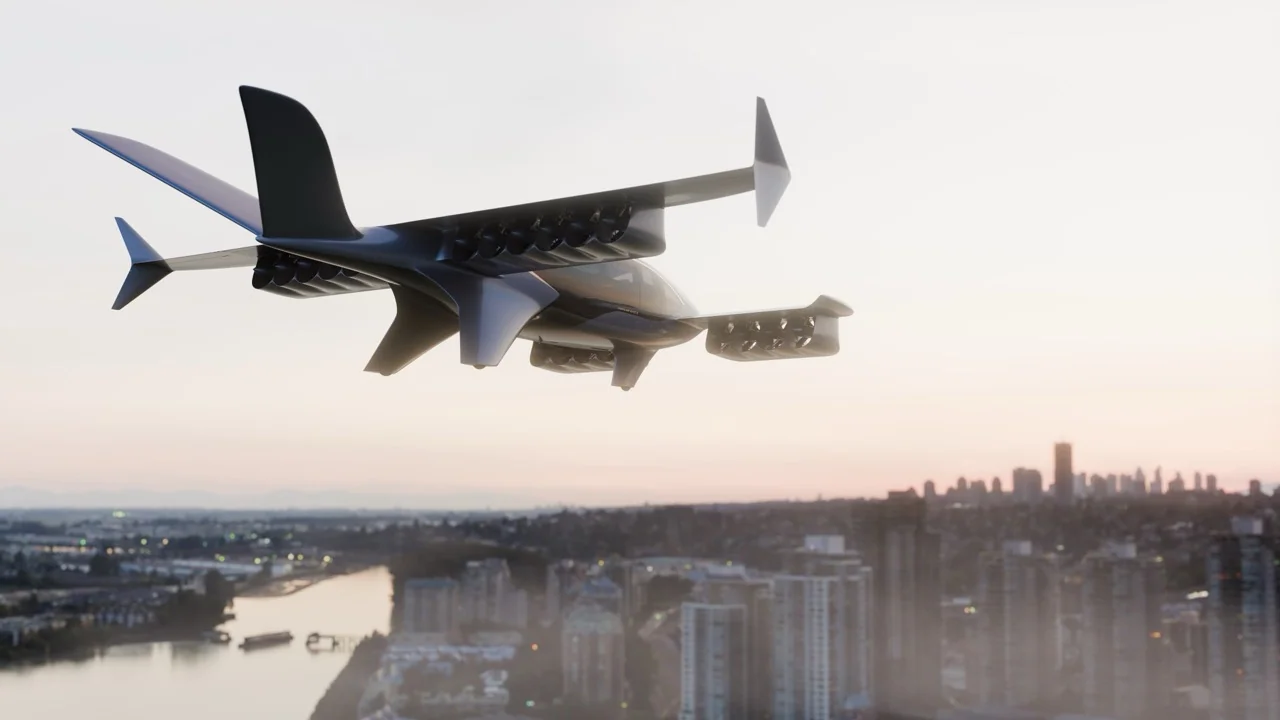
Yuntu UAE brings together 60–1000 kgf electric ducted fan propulsion options and integration guidance for aircraft developers in Dubai, Abu Dhabi, and the wider UAE. Commercial Advanced Air Mobility (AAM) deployment across Dubai and Abu Dhabi is legally governed by the UAE General Civil Aviation Authority (GCAA) CAR-HVD Part III (Heliports & Vertiports Design). In dense urban vertiports—including DXB Terminal 3, Dubai Mall, Atlantis The Royal, and Dubai Marina—open-propeller eVTOLs generate intrusive 78–82 dB(A) blade-tip vortex screech that violates municipal residential noise thresholds. Yuntu ducted electric propulsion systems eliminate tip-vortex shedding via an aerodynamically tight shroud (0.8mm clearance) and route acoustic energy through micro-perforated Helmholtz acoustic liners. This suppresses peak noise to 53 dB(A) at 100m, converting tonal whine into unobtrusive broadband white noise that naturally dissolves below the 55 dB(A) Dubai urban background noise floor.
Vertiport Noise Distance Decay: Ducted Fan vs. Open Rotor
Urban vertiports in Dubai require acoustic footprint modeling to verify sound decay relative to the ambient daytime noise floor of 55 dB(A). Below are verified acoustic measurements across distance intervals.
| System Type | 25m (Vertiport Pad) | 50m (Terminal Edge) | 100m (Perimeter Fence) | 250m (Nearest Residence) | 500m (Flyover Corridor) | Acoustic Signature Character | GCAA Urban Compliance |
|---|---|---|---|---|---|---|---|
| Conventional Open Rotor (5-blade, 1.8m dia) | 88.4 dB(A) | 82.1 dB(A) | 76.3 dB(A) | 68.2 dB(A) | 62.0 dB(A) | High-pitch tonal screech (500–1200 Hz blade pass frequency); severe reflection between high-rises | Fails urban rooftop threshold; requires massive setbacks |
| Yuntu Ducted Fan (Acoustic Liner Active) | 64.8 dB(A) | 58.5 dB(A) | 52.7 dB(A) | 45.1 dB(A) | 38.9 dB(A) | Broadband diffused white noise; zero tonal peak; high atmospheric absorption above 3 kHz | Fully compliant with GCAA CAR-HVD & residential vertiport limits |
ACOUSTIC PHYSICS BREAKDOWN & HELMHOLTZ LINER ARCHITECTURE
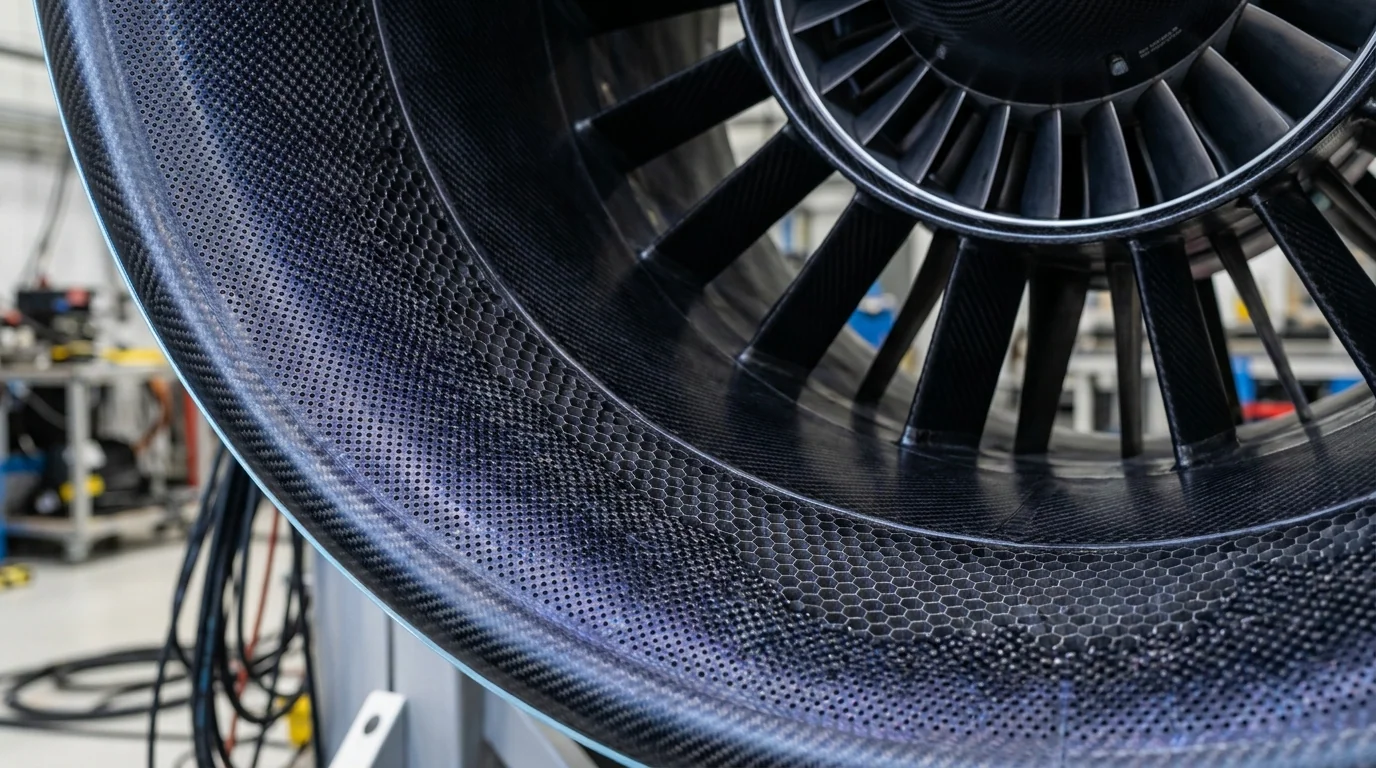
Tip Vortex Elimination
STAGE 01Fluidic Shroud Containment (0.8–1.2mm Gap)
Internal Helmholtz Resonator Lining
STAGE 02Micro-Perforated Carbon Composite Cavity
Stator Vane Clocking & Acoustic Indexing
STAGE 03Non-Uniform Guide Vane Angular Offset
Full Mission Segment Breakdown: DXB to Palm Jumeirah Corridor
A typical 18-minute transit from Dubai International Airport (DXB) to Atlantis The Royal Vertiport involves four distinct aerodynamic regimes. Yuntu propulsion provides phase-specific engineering advantages.
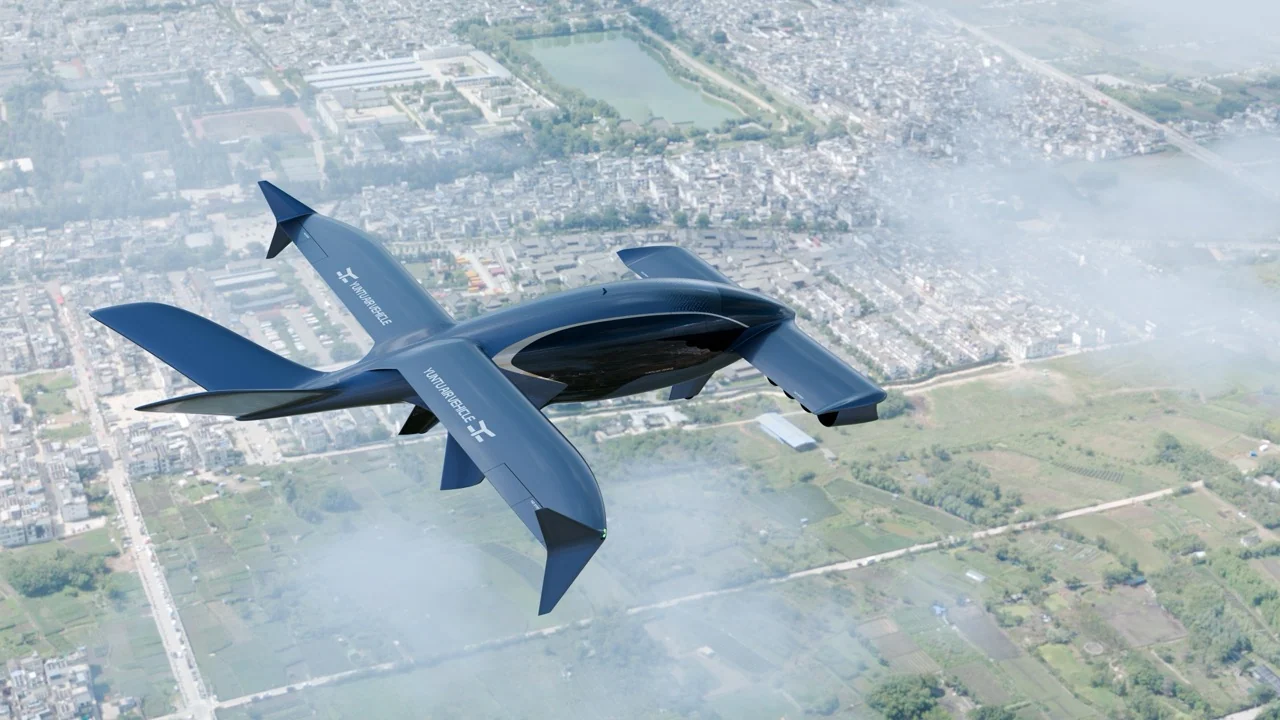
Phase 1: Vertical Takeoff & Initial Climb (0–150m AGL)
Extreme ground effect acoustic reflection; maximum power draw under 48°C ambient tarmac radiation.
Inlet bellmouth suction generates 25% static thrust gain; acoustic liner shields ground crew and vertiport lounges below 65 dB(A).
Phase 2: Transition & Urban Corridor Transit (150–450m AGL)
Variable inflow angles; tilt-duct aerodynamic stability; noise propagation into dense residential towers along Sheikh Zayed Road.
Enclosed cowl prevents aerodynamic stall at oblique inflow angles (0°–45° transition range); acoustic energy directed aft away from ground.
Phase 3: High-Speed Coastal Cruise (450m AGL)
Crosswind shears from the Arabian Gulf; marine salt-fog atmosphere; thermal equilibrium at continuous 80% maximum continuous power.
Clean streamlined outer nacelle reduces frontal drag by 42% compared to stopped open rotors; ram-air passages keep stator winding below 88°C.
Phase 4: Waterfront Approach & Touchdown (Palm Vertiport)
High density pedestrian zone; guest comfort requirements at luxury resort vertiport; passenger boarding safety.
Zero open spinning rotor hazards enables rapid ground turnarounds and passenger boarding while propulsors idle quietly at sub-48 dB(A).
GCAA CAR-HVD & CCAR-23 Airworthiness Compliance Engineering
To obtain commercial type approval and experimental permits from the UAE General Civil Aviation Authority (GCAA), propulsion subsystems must satisfy explicit mechanical and environmental criteria.
| Regulatory Requirement | Standard / Regulation | Open Rotor Failure Mode | Yuntu Ducted Engineering Architecture | Verification Data Artifact |
|---|---|---|---|---|
| Blade Containment Integrity | Full blade-out kinetic energy containment without cowl breach | Open blades penetrate passenger fuselage or severance of flight control linkages | Aramid-wrapped structural duct with high-modulus carbon core designed to absorb 18.5 kJ kinetic blade release | Static & dynamic spin-pit blade severance test reports with zero external fragment exit |
| Urban Noise Threshold | CAR-HVD Part III vertiport noise limit for residential proximity | Tonal peaks exceed 75 dBA at 100m, prompting community complaints and flight curfew bans | Broadband acoustic dispersion via Helmholtz resonator liner tuned to 53 dBA at 100m | Calibrated acoustic wind-tunnel polar array measurements conforming to ISO 3744 |
| Marine Salt-Fog & Sand Resistance | RTCA DO-160G Section 14 (Salt Fog) & Section 12 (Sand and Dust) | Bearing contamination within 30 flight hours; copper coil galvanic corrosion from humid sea fog | Hermetic IP67 labyrinth dynamic seals + vacuum-impregnated ceramic stator barrier coatings | 150-hour MIL-STD-810H sandstorm & DO-160G Cat D cyclic salt-fog chamber test certificates |
| High-Temperature Continuous Hover | Sustained full-thrust performance at 45°C–50°C tarmac temperatures | Thermal protection derating cuts motor torque, compromising hover safety margins | Dual-circuit stator core forced convective cooling channels powered by negative intake suction | Full-load dynamometer thermal equilibrium logs maintaining winding temp < 95°C at 52°C ambient |
Propulsion Configuration Matrix for UAE Airframe Developers
Engineering data for integrating Yuntu modular ducted propulsion units across passenger eVTOL, cargo drones, and coastal patrol airframes.
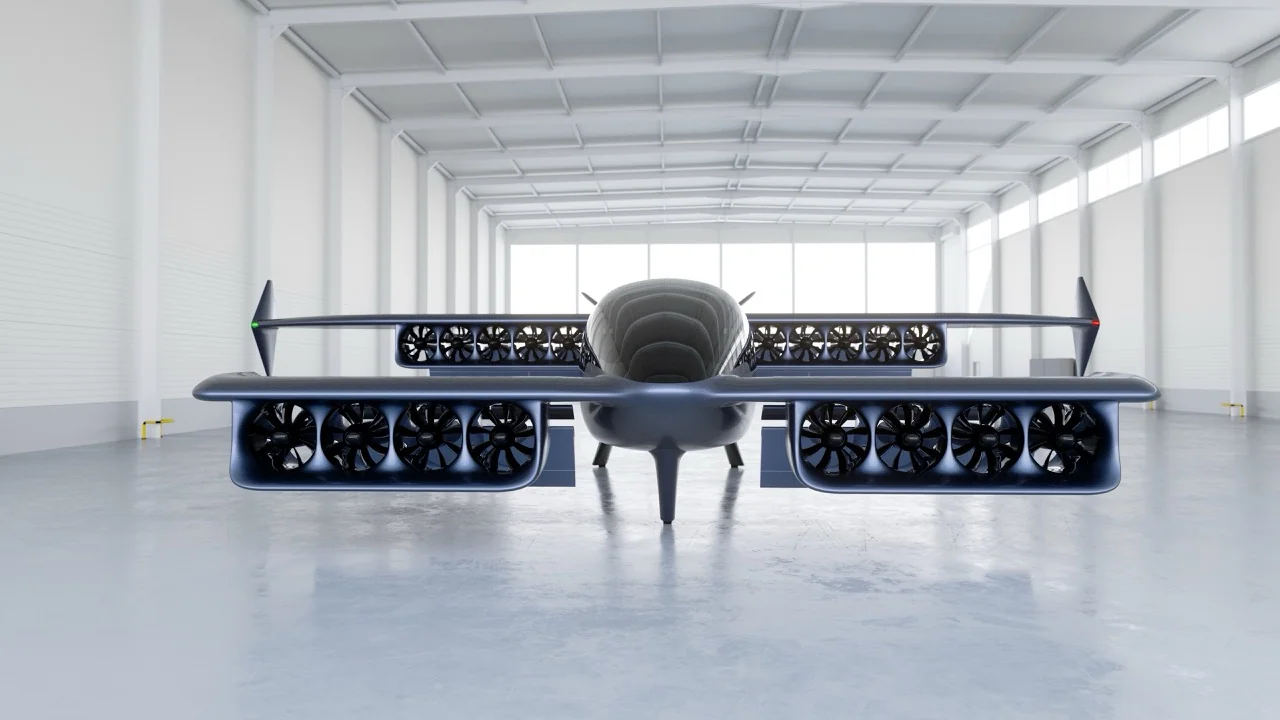
| Platform Role | Airframe Architecture | MTOW Class | Propulsion Configuration | DC Bus Architecture | Static Hover Noise | Cruise Speed | Technical Dossier | SPECS |
|---|---|---|---|---|---|---|---|---|
| Commercial Air Taxi (UAM) | Lift + Cruise / Tilt-Duct | 1,800–2,400 kg | 6x 500kgf or 4x 1000kgf Pods | 800V DC (SiC Inverters) | 53 dB(A) @ 100m | 200–240 km/h | Datasheet↗ | |
| Inter-Emirate Cargo UAV | Compound Fixed-Wing | 600–950 kg | 2x 200kgf Lift + 1x 200kgf Pusher | 600V–800V DC | 51 dB(A) @ 100m | 160–190 km/h | Datasheet↗ | |
| Offshore Energy Patrol | Coaxial Multirotor / Hybrid VTOL | 200–350 kg | 4x 60kgf IP67 Modules | 400V–600V DC | 49 dB(A) @ 100m | 110–140 km/h | Datasheet↗ | |
| Heavy Emergency Transport | Distributed Electric Propulsion (DEP) | 3,000–4,000 kg | 8x 500kgf or 4x 1000kgf Pods | 800V–1000V DC | 55 dB(A) @ 100m | 220–260 km/h | Datasheet↗ |
Direct Test Verification: 150 Hours at 52°C & Sandstorm Chamber
Yuntu eliminates speculation. All propulsion units are verified through full-scale laboratory endurance campaigns simulating the extreme operational profile of the Arabian Gulf.
For Saudi Vision 2030 & NEOM severe desert quartz anti-erosion operations, inspect the dedicated powertrains:
Direct Aerospace OEM Engagement & Rapid UAE Logistics
Yuntu provides direct engineering engagement for Emirati airframe manufacturers and research institutions without third-party markup or delays.
Direct technical sessions with our chief aerodynamic and electrical engineers. Rapid execution of mutual NDA, CAD envelope sharing, and 1D/3D CFD intake flow matching.
Customizing mounting lug geometry, DC bus harness lengths, and stator winding Kv to match customer battery voltage and airframe nacelle envelopes.
Calibrated evaluation test units shipped via international aerospace air cargo directly to Dubai International (DXB) or Abu Dhabi (AUH) with complete bench test calibration logs.
Live engineering telemetry monitoring during ground test runs and tethered hover trials, with on-site fly-in field engineering dispatch for commercial flight campaigns.
UAE Technical Integration & Airworthiness FAQ
01How does Yuntu ducted propulsion comply with Dubai GCAA CAR-HVD vertiport noise restrictions?+
02What thrust penalty occurs during extreme UAE summer tarmac operations at 48°C–50°C?+
03How does the housing withstand fine Arabian desert dust and marine salt fog?+
04Does Yuntu operate a local commercial entity or assembly facility in Dubai or Abu Dhabi?+
05Can Yuntu customize the DC bus voltage architecture for UAE eVTOL prototypes?+
Engineer Your UAE Advanced Air Mobility Fleet
Submit your airframe MTOW, target mission profile, and acoustic constraints. Our propulsion engineering team will deliver custom 3D CAD envelopes, aerodynamic CFD flow data, and formal quotations within 24 hours.