
Hybrid Drones: How Gas-Electric Powertrains Extend Endurance and Payload
Overcoming all-electric lithium battery boundaries for multi-hour industrial cargo, persistent maritime surveillance, and heavy-payload VTOL platforms through aviation-grade distributed ducted propulsion.
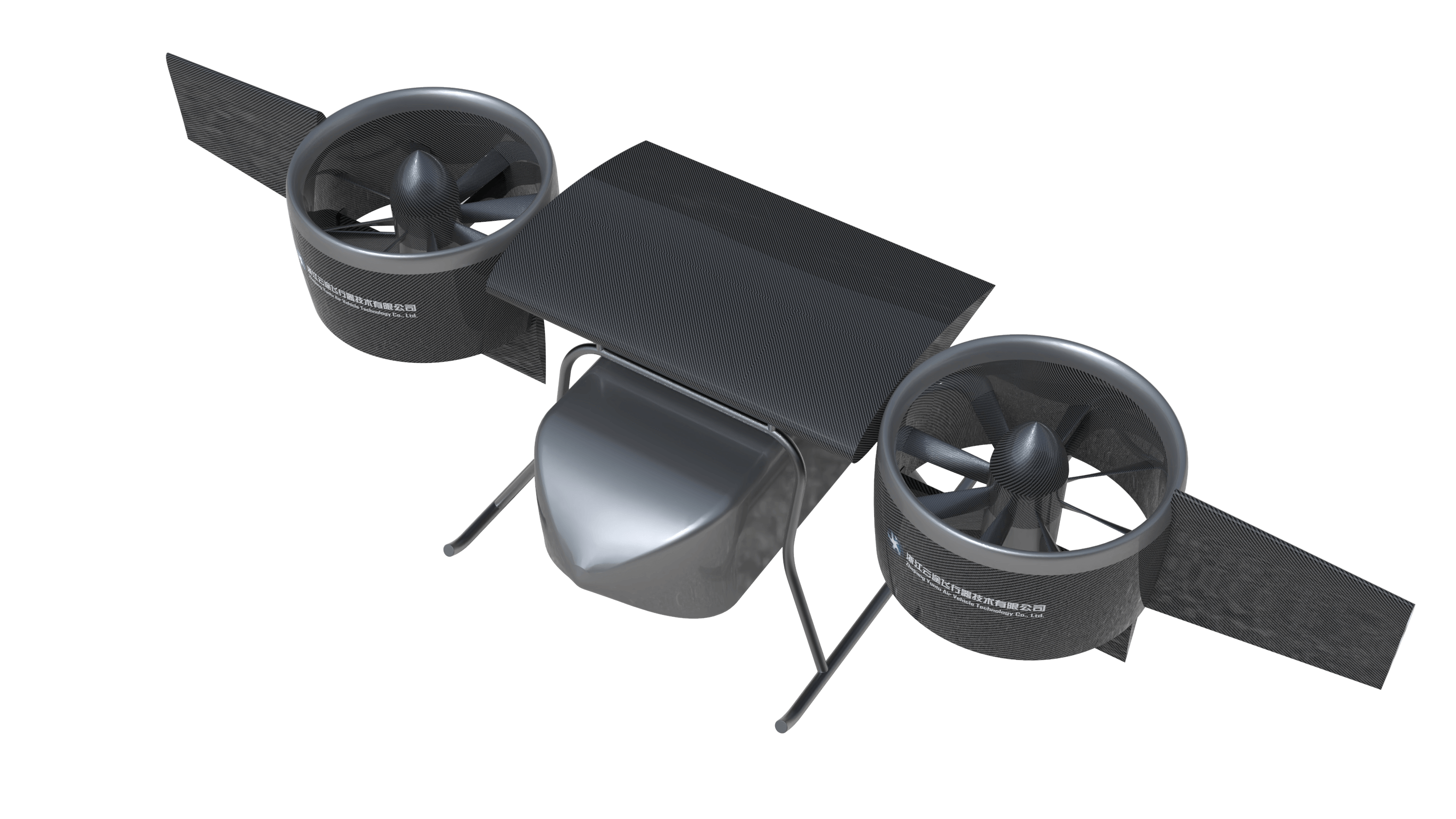
A hybrid drone integrates an internal combustion engine or micro-turbine with an electric generator, high-discharge buffer battery, and electric propulsors. By leveraging liquid fuel’s high energy density (~12,000 Wh/kg vs ~250 Wh/kg for lithium cells), series-hybrid powertrains extend industrial flight endurance from 30 minutes to 3–6 hours while preserving the instantaneous dynamic response, acoustic shielding, and multi-motor redundancy of distributed electric ducted fans.
Hybrid Drone Powertrain Architectures: Series vs. Parallel
The selection of energy-flow topology dictates mechanical complexity, power electronics weight, and compatibility with distributed electric ducted fans.
Series Hybrid (Range-Extender)
The internal combustion engine runs at a steady, fuel-optimized RPM purely driving a generator. Electric motors handle 100% of aerodynamic thrust, enabling full aerodynamic layout flexibility and rapid differential thrust control.
Parallel Hybrid
Both the thermal engine and electric motor physically connect to the same propulsor shaft. High peak efficiency during forward cruising, but incompatible with distributed multi-fan flight control.
Series-Parallel / Dual Mode
Combines series generation with high-speed direct mechanical lock-up. Excessive empty-weight fraction makes it uncompetitive for typical commercial UAV payloads below 2 tons MTOW.
Endurance vs. Payload: The Fundamental Energy Trade-Off
Industrial drone operators encounter an unyielding physics limit with pure lithium battery systems. Hybrid powertrains exploit chemical energy thermodynamics while retaining electric flight control.
Hydrocarbon vs Li-Ion Energy Density
Duty-Cycle Decoupling in Series Hybrids
Hover requires 3x to 4x the electrical power of aerodynamic cruise. In a series-hybrid architecture, a compact buffer battery provides peak discharge for 2–3 minutes of vertical takeoff and landing, while a right-sized engine-generator continuously delivers the average cruise power.
As fuel is consumed, the aircraft gross weight drops dynamically (unlike battery deadweight), substantially decreasing induced drag and hovering power requirements toward the end of the mission.
Where Electric Ducted Fans Fit in Hybrid Aircraft
While open propellers suffer from tip losses and hazardous exposed blades, series-hybrid electrical architectures allow ducted fans to unlock unprecedented platform benefits:
Lip Suction Static Augmentation
Aerodynamically shaped duct lips generate up to 20%–35% additional static thrust during high-weight vertical takeoff, compensating for higher disk loading.
Full FOD & Ground Crew Containment
Enclosed composite shrouds prevent foreign object damage (FOD) during austere field operations and eliminate catastrophic propeller-strike risks to ground personnel.
Acoustic Liner Shielding
Nacelles lined with micro-perforated Helmholtz absorption cavities attenuate engine and blade passing frequency noise, achieving community-friendly 53 dBA sound footprints.
Aerodynamic Independence via Series Bus
Because electrical cables replace mechanical shafts, ducted thrusters can be embedded into wing surfaces, fuselage sponsons, or tandem-wing arrays without mechanical drag penalties.
Matching Thrust Classes to Hybrid UAV Platforms
Yuntu provides off-the-shelf and customizable electric ducted propulsion units specifically matched to industrial generator-bus architectures:
| Thrust Class | Power Rating | Propulsor | Target Platform | Payload | Endurance | Specs |
|---|---|---|---|---|---|---|
| 200 kgf (1.96 kN) | 50 kW Electric Bus | YTF-200 Aviation EDF | Medium-Payload Logistics & Tactical Hybrid VTOL | 40–100 kg Cargo | 4–6 Hours Persistent Flight | Datasheet → |
| 500 kgf (4.90 kN) | 120 kW Electric Bus | YTF-500 Heavy-Lift Thruster | Ton-Class Hybrid Fixed-Wing / Compound UAV | 250–400 kg Industrial Payload | 5–8 Hours Regional Transit | Datasheet → |
| 1000 kgf (9.81 kN) | 600 kW High-Voltage Bus | YTF-1000 High-Thrust Unit | Regional Hybrid Air Cargo & Multi-Passenger Platforms | 800–1500 kg Heavy Transport | 3–4 Hours Ferry / Transit (800 km) | Datasheet → |
From Propulsion Subsystems to a 7-Seat Hybrid Flight Testbed
To validate full-scale distributed electric propulsion dynamics, thermal dissipation, and series-hybrid control laws under real flight loads, Yuntu engineers developed a 7-seat tandem-wing hybrid technology demonstrator.
Frequently Asked Questions: Hybrid Drone Powertrains
Addressing technical trade-offs, architecture selection, and commercial boundaries.
Planning a Hybrid-Electric Platform? Talk to Our Propulsion Team
From engine-generator electrical bus matching and buffer battery C-rate sizing to wind-tunnel calibrated ducted fan thrust arrays, our applications engineering lab supports OEM integrators worldwide.