
For a century, aviation propulsion was dictated by the Carnot thermal cycle: conventional fossil-fueled turbine cores scale in thermal efficiency and power-to-weight only as they grow larger. In all-electric aviation, however, permanent magnet synchronous motors display scale invariance—a 20kW ducted fan motor matches the 95% electromagnetic efficiency of a megawatt-class unit while offering superior heat dissipation and throttle slew rates. This unlocks Distributed Electric Propulsion (DEP).
1. Scale Invariance: Breaking the Centralized Engine Bottleneck
Small electric propulsion units distribute mass, aerodynamic lift generation, and control moments across the airframe rather than concentrating thousands of kilograms of thrust in one or two vulnerable engine pods.
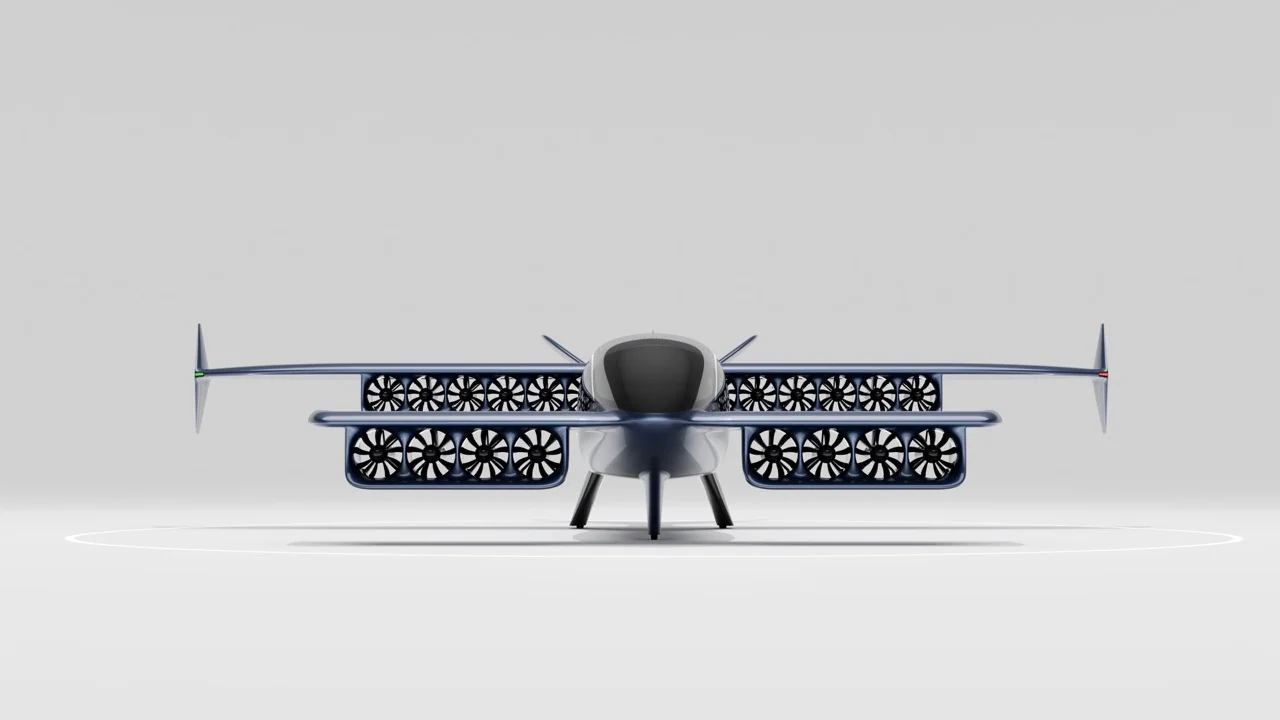
2. Tandem-Wing Synergy: Eliminating the Heavy Mechanical Tilting Trap
Tilt-rotor mechanisms incur heavy hydraulic actuators, cross-wing drive shafts, and severe aerodynamic stall buffet during the 45-degree transition phase. Yuntu adopts fixed-incidence ducted thrusters across tandem fore and aft wings. Vertical climb and forward flight are modulated purely through electronic differential motor RPM, cutting moving mechanical linkages by over 60%.
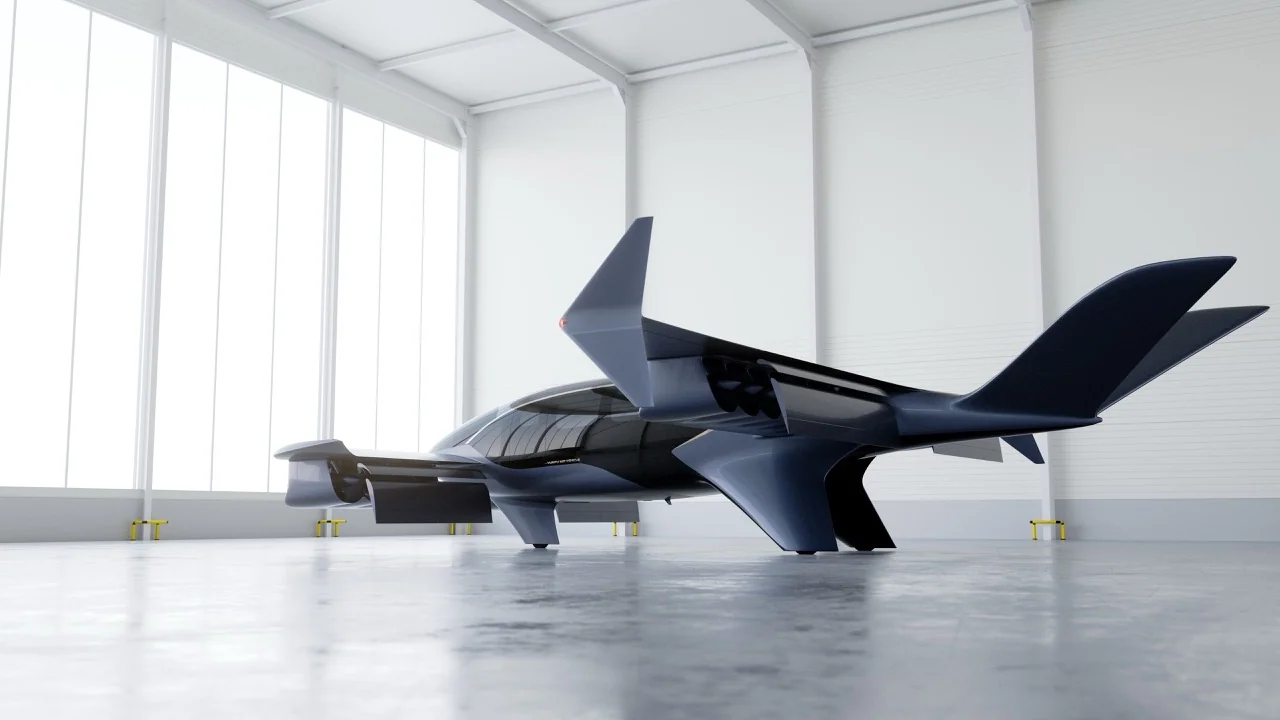
3. Achieving Civil 10⁻⁹ Airworthiness Failure Tolerance
Under FAA Part 135 and EASA SC-VTOL commercial passenger regulations, catastrophic hull-loss probabilities must be proven mathematically below 10⁻⁹ per flight hour. With 20 independent ducted units powered by isolated high-voltage DC buses and millisecond algorithmic thrust vectoring, losing multiple thrusters still leaves total T/W > 1.05 for safe, controlled landing.
4. Engineering Conclusion: The Solid Foundation for Advanced Air Mobility
True aerospace innovation does not emerge from patchworking legacy mechanical architectures, but by harnessing fundamental physics to supersede obsolete design compromises. The combination of fixed tandem wings and distributed electric ducted fans establishes an uncompromising standard for commercial airworthiness and whisper-quiet flight. To evaluate full-powertrain OEM deliveries, consult the eVTOL Ducted Propulsion Integration Blueprint; to review individual thruster specs and sizing cases, explore our Electric Ducted Fan Technical Whitepaper; for industrial multirotor and tactical platform integrated propulsion architectures, review the Integrated Drone Electric Propulsion Blueprint; for propulsion hardware evaluation, refer to our benchmark high-voltage certified 200kgf Aviation Propulsion Unit.
Distributed Electric Propulsion (DEP) Architecture FAQ
Why does Distributed Electric Propulsion (DEP) favor fixed tandem wings over tilt-rotors?
Tilt-rotor mechanisms add hydraulic rams, cross-shafting, and complex gearboxes that consume over 20% of structural weight while introducing single-point catastrophic failure modes during transition. Fixed tandem wings with embedded ducted fans transition seamlessly from hover to wing-borne cruise entirely via software motor RPM differential without moving mechanical parts.
What is the "scale invariance" of electric motors compared to gas turbines?
Gas turbines obey thermal scale laws—larger engines yield higher thermal efficiency. Permanent-magnet electric motors, however, maintain ~95% electromagnetic efficiency whether sized at 20kW or 1000kW. This allows aerospace engineers to distribute propulsion into many compact, aerodynamically integrated thrusters without any efficiency penalty.
How do 20 distributed ducted units achieve civil aviation 10⁻⁹ safety certification?
The 20 thrusters are wired across four physically isolated high-voltage DC bus channels with 100Hz algorithmic thrust vectoring. In an uncontained loss of 2 or 3 thrusters, the flight control computer recalculates dynamic thrust in milliseconds to maintain attitude stability and T/W ≥ 1.05 for a controlled landing.